
RetrainingIndustrial mechanicProduction technology (IHK)
Milling, turning, CNC programming: You keep the technology running.
- Qualification
- Skilled worker’s certificate (IHK)
- Duration
- 24 months, full time
- Cost
- €0 with an education voucher
From raw part to running plant.
Your future workplace, station by station. And what you learn for it in the retraining.
From raw part to running plant.
Your future workplace, station by station. And what you learn for it in the retraining.
Station 1 of 6
A steel bar becomes a shaft.
On the lathe you turn the shaft to size. Drilling, bending, milling, turning: this is the largest learning field of the retraining.
What you learn for it- Manufacturing components and assemblies
Your specialism: production technology.
Industrial mechanics specialise in one of four areas. At BFI, it is production technology.
Precision equipment
Practical exam, part 2
Mechanics
Maintenance
Practical exam, part 2
Mechanics
Machine and plant construction
Practical exam, part 2
Mechanics
At BFI
Production technology
Practical exam, part 2
Mechanics and controls
Only production technology includes a control system in the practical exam.
Areas under section 11(2) IndMetAusbV. Exam based on the PAL (IHK) tasks for 2025 and 2026.
What you build in the exam.
A fixture with a control system, for example for drilling. It runs on compressed air.
Build
You make parts from drawings and assemble the fixture.
Connect
You set up the controls: cylinders, valves and push buttons. Pneumatic, or electro-pneumatic at 24 volts.
Commission
You adjust everything, test every function and machine a workpiece with it.
At BFI, metalwork and electrical instructors work under one roof. So you learn both: pneumatics and electro-pneumatics, plus two weeks of PLC training.
How your retraining works.
24 months in five steps. From the first day to your qualification.
Start 15 Feb 2027
End 20 Feb 2029
approx.14months
Basics
Drilling, turning, milling, materials and pneumatics. At the end: part 1 of the final exam.
approx.3months
Machines and systems
Assembly, maintenance and fixing faults.
3months
Work placement
You work in a company for three months.
approx.4months
Deepening
You deepen what you have learned and prepare for the exam.
Goal
Final exam part 2, Chamber of Industry and Commerce (IHK)
Then you are a skilled worker.
End 20 Feb 2029
- Classes
- Mon–Fri, 08:00–15:15
- Holidays
- 2 months, in line with school holidays
- Curriculum
- PDF in German, 1 MB
See all learning content14 learning fields, each explained · 3,360 teaching units
Basics
You set up your workplace, plan the work steps and get tools and materials ready. At the end you check your result with test equipment.
For example
You measure a finished workpiece with a caliper and write down the result.
160 of 3,360 teaching units
5% of the whole retraining
You learn the properties of materials such as steel and choose the right one for each part. Auxiliary materials such as oils and coolants are part of this too.
For example
You use the right coolant when drilling and dispose of it properly afterwards.
160 of 3,360 teaching units
5% of the whole retraining
A piece of metal becomes a component. You work by hand and on machines: you drill, turn and mill, and join the parts into assemblies.
For example
You clamp a workpiece in the lathe, turn it to size and check it.
800 of 3,360 teaching units
24% of the whole retraining
Machines and tools last longer when they are looked after. You inspect them regularly, clean and lubricate them and replace damaged parts.
For example
You top up the oil on a machine, check the cables for damage and log the maintenance.
160 of 3,360 teaching units
5% of the whole retraining
Control systems make machines work automatically. You read circuit diagrams and build control systems that run on compressed air (pneumatics), also with electrical components (electro-pneumatics).
For example
Following a circuit diagram, you build a control system in which compressed air moves a cylinder.
240 of 3,360 teaching units
7% of the whole retraining
Heavy parts are not moved by hand. You choose slings, chains and lifting equipment such as a crane, check that they are safe and move the load.
For example
You attach a heavy machine part securely to the crane and set it down in the storage area.
80 of 3,360 teaching units
2% of the whole retraining
You find out exactly what a job requires and pass the information on to everyone involved. You point out safety rules to customers.
For example
You ask which dimensions the customer needs exactly and pass them on to your team.
80 of 3,360 teaching units
2% of the whole retraining
You assemble and dismantle assemblies and machines according to plans. You also set up machines for new jobs.
For example
You take a gearbox apart, mark and clean the parts and put it back together.
200 of 3,360 teaching units
6% of the whole retraining
Machines and systems
When a machine stops, you find out why. You narrow down the fault, fix it and check the safety devices.
For example
A plant reports a fault. You look for the cause, replace the defective part and check that the plant runs safely again.
240 of 3,360 teaching units
7% of the whole retraining
To keep machines and plants from breaking down, you maintain them according to a plan. You repair damage and record what you have done.
For example
You draw up a maintenance plan: what is checked on the plant, and when?
200 of 3,360 teaching units
6% of the whole retraining
Many machines are controlled electrically. You install electrical components that run on extra-low voltage and check that the control system works correctly.
For example
You read the circuit diagram, fit a sensor and check that the control system runs the sequence correctly.
240 of 3,360 teaching units
7% of the whole retraining
You learn how a job runs in a company: from agreeing it with the customer to the handover. Along the way, you make sure the quality is right.
For example
You inspect parts according to an inspection plan, look for the cause of a defect and document everything.
80 of 3,360 teaching units
2% of the whole retraining
Here you practise complete production jobs. You plan how a part is made and choose the processes, tools and machines.
For example
You work out the speed and feed for a part and decide which machine will make it.
480 of 3,360 teaching units
14% of the whole retraining
This is about the world of work: employment contracts, collective agreements, works councils and how a company is organised. It is also part of the final exam.
For example
You read an employment contract and know which rights and obligations it contains.
240 of 3,360 teaching units
7% of the whole retraining
Throughout the retraining
Working safely and healthily, environmental protection, digitalisation of work, and data protection and information security.
How the exam works
Part 140%of the overall result
You make an assembly with a control function. Short discussions and written tasks are part of it.
- Complex work taskpractical and written, 8 hours
Part 260%of the overall result
A practical work assignment and three written exams.
- Work assignmentpractical, with a technical discussion, 14 hours30%
- Order and function analysiswritten12%
- Production technologywritten12%
- Economics and social studieswritten, 1 hour6%
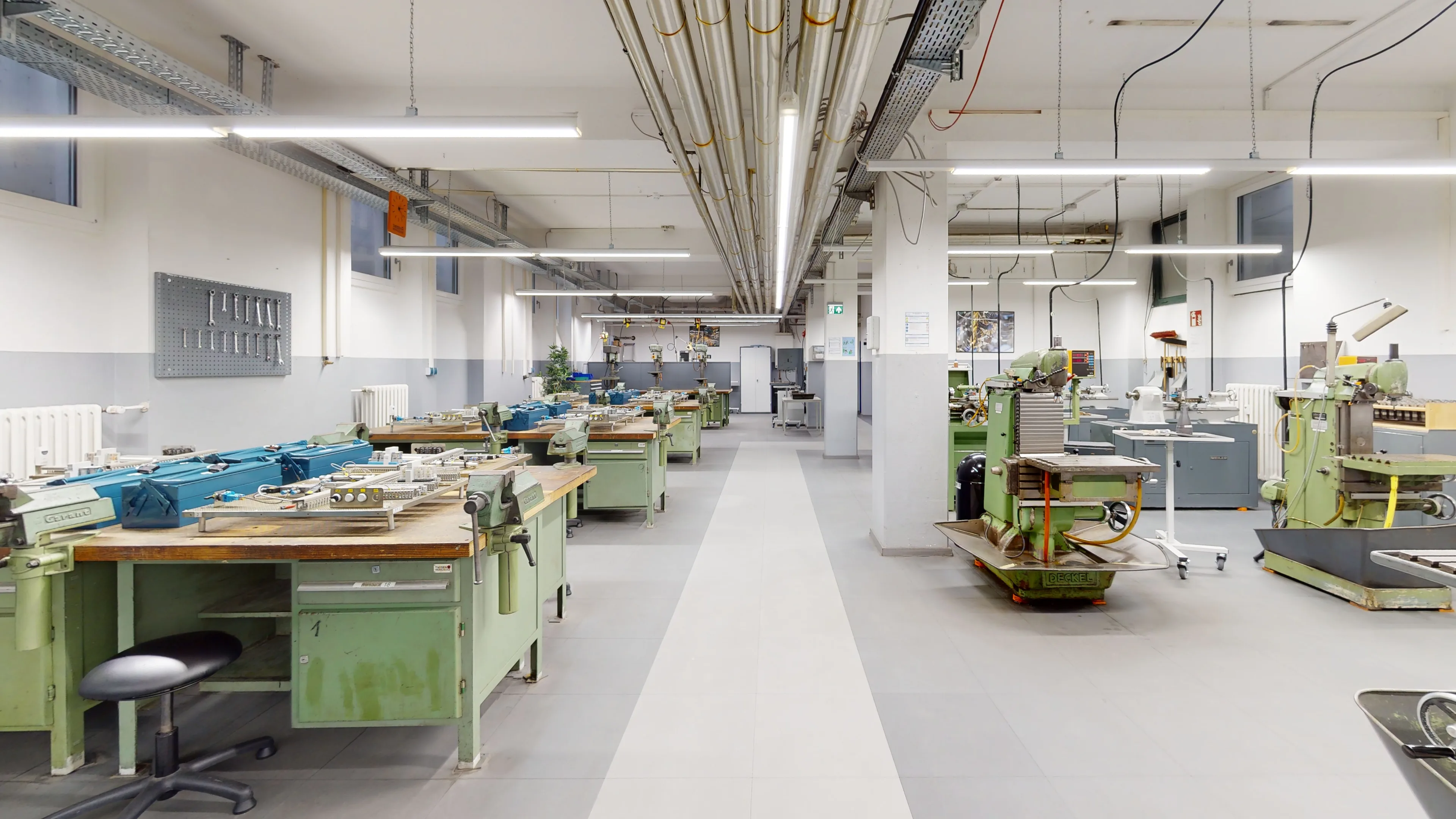
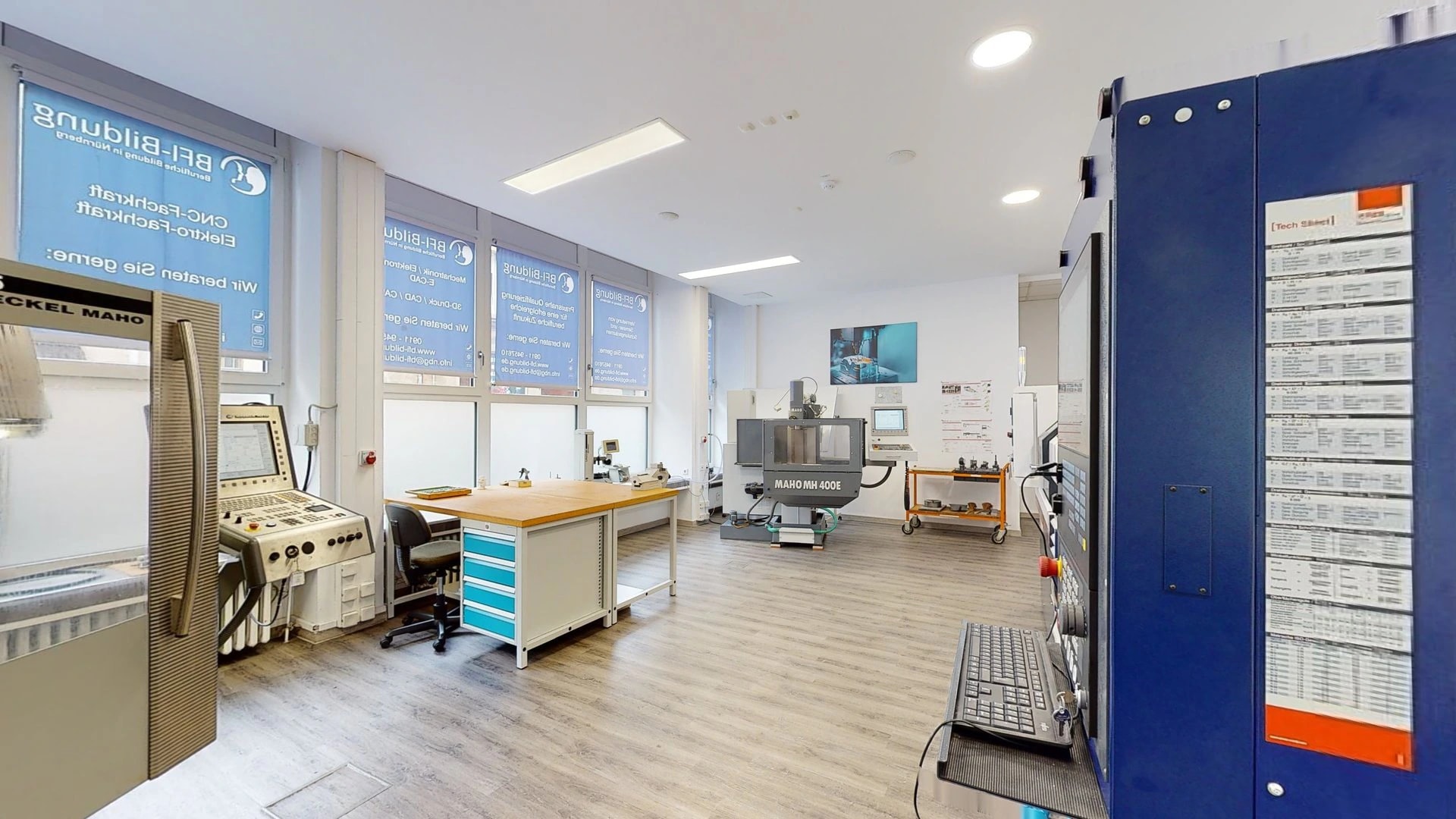
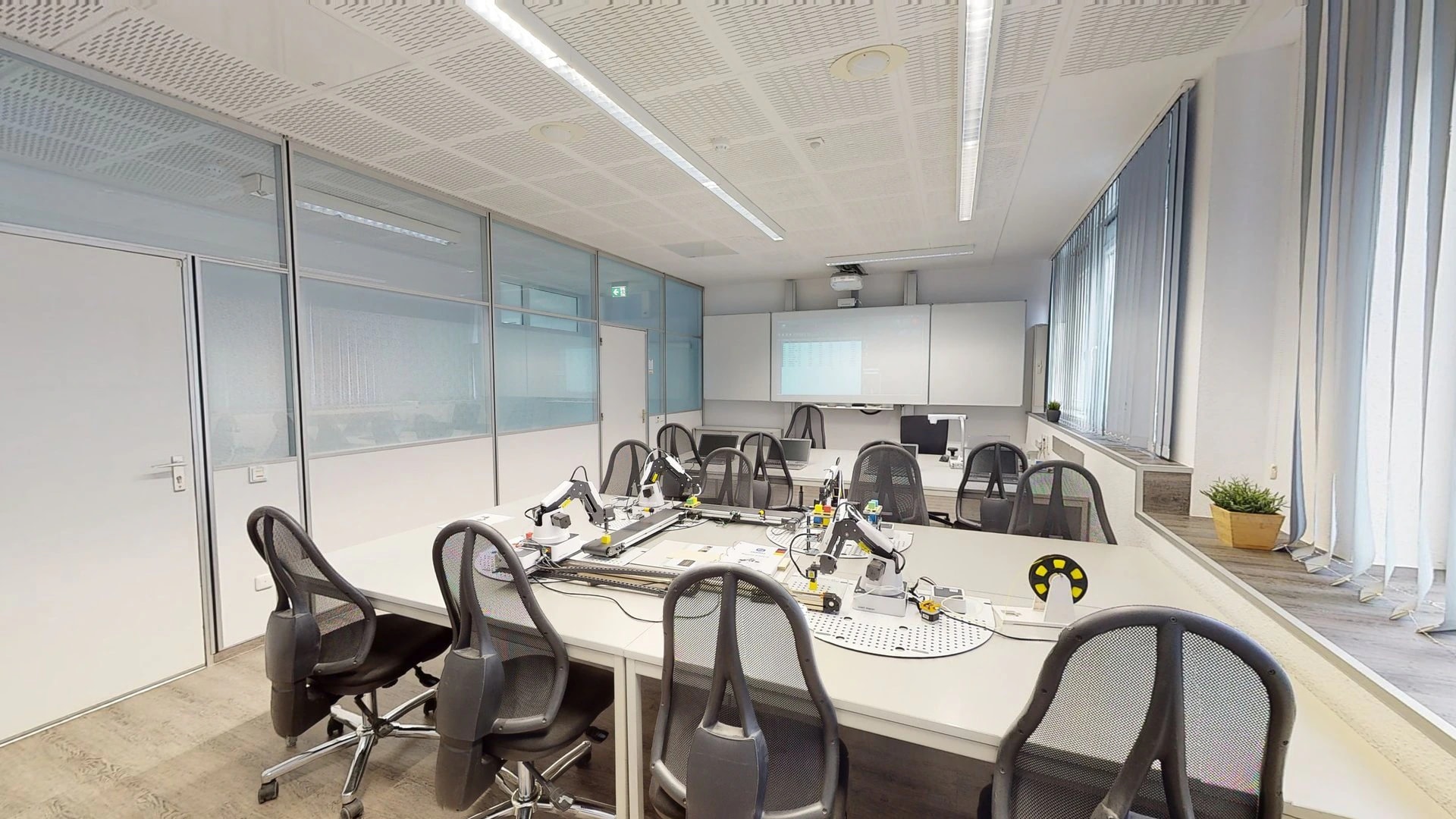
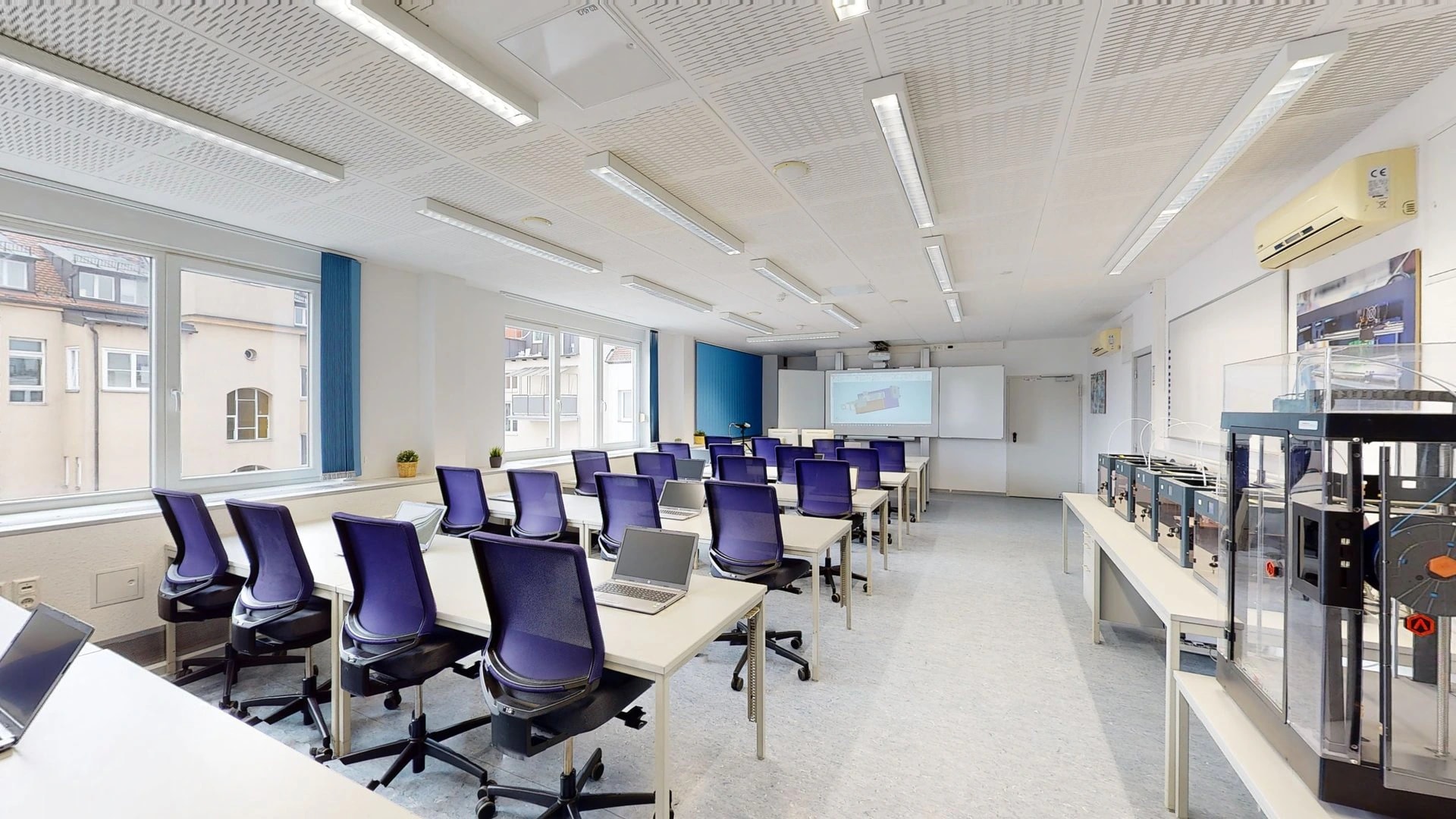
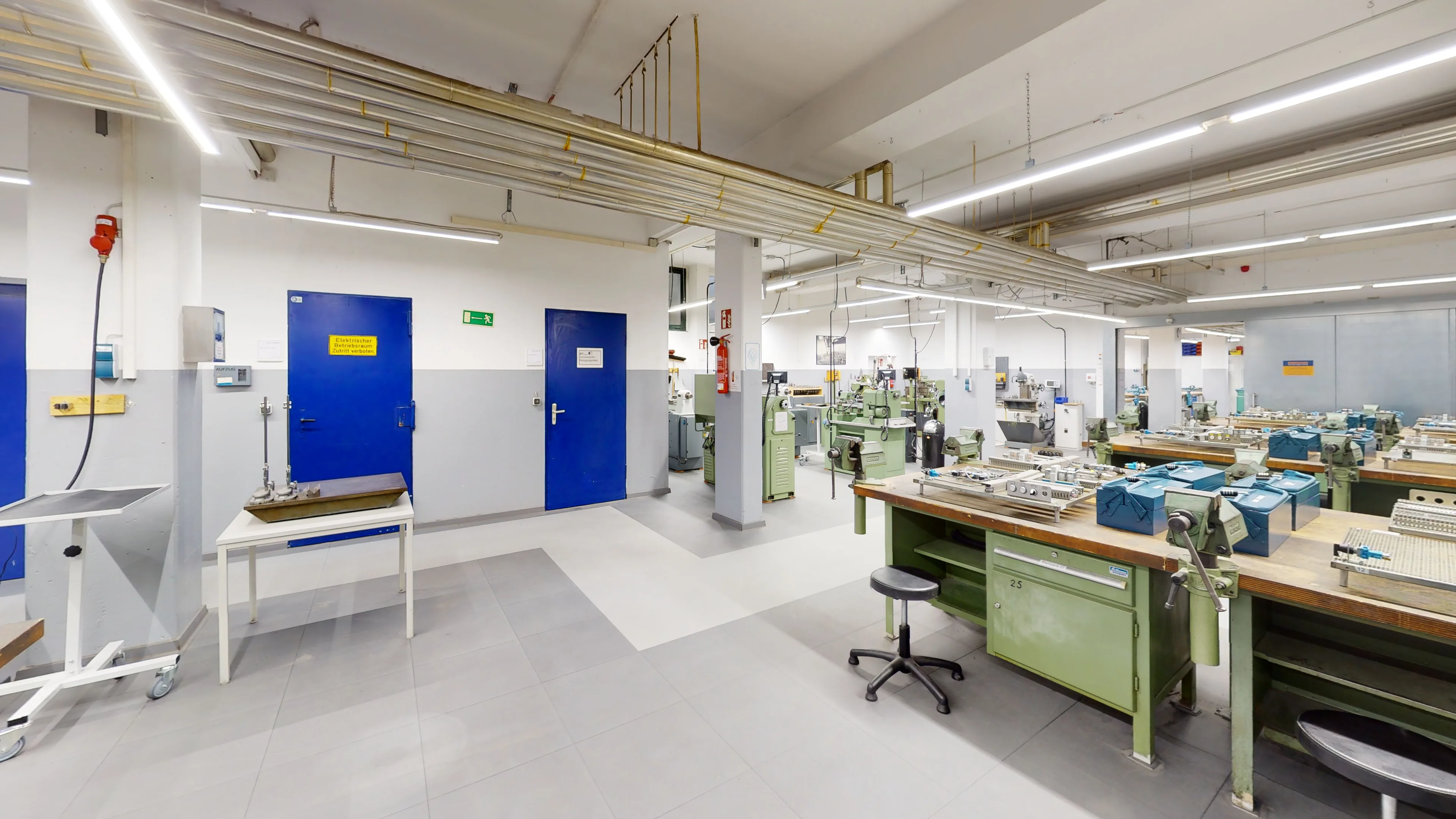
Where you learn.
The rooms of your retraining in 3D. Take a look around before your first day.
You learn from them.
You learn in small groups of approx. 15 people.
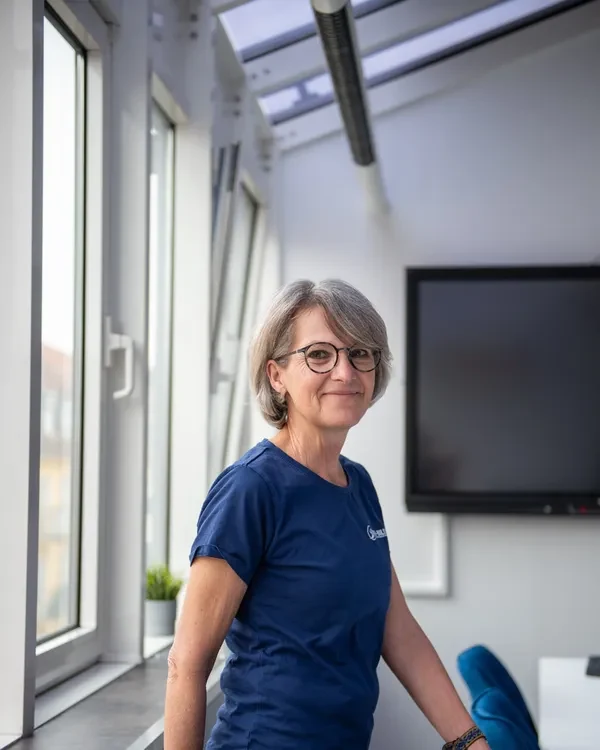
Susanne Weller 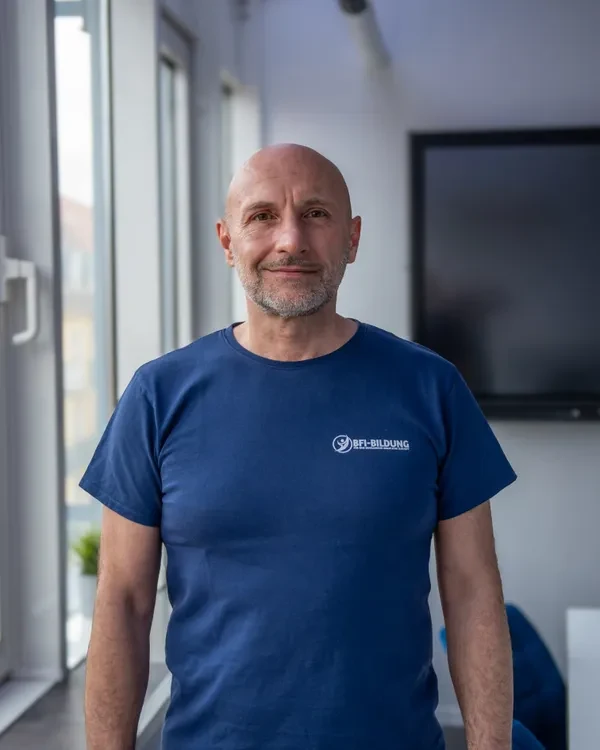
Vladimir Blazan 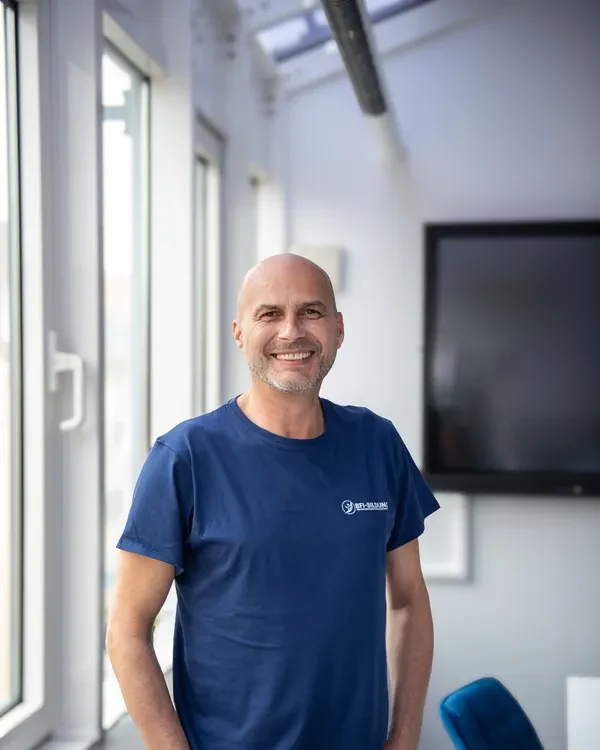
Roland Pangerl 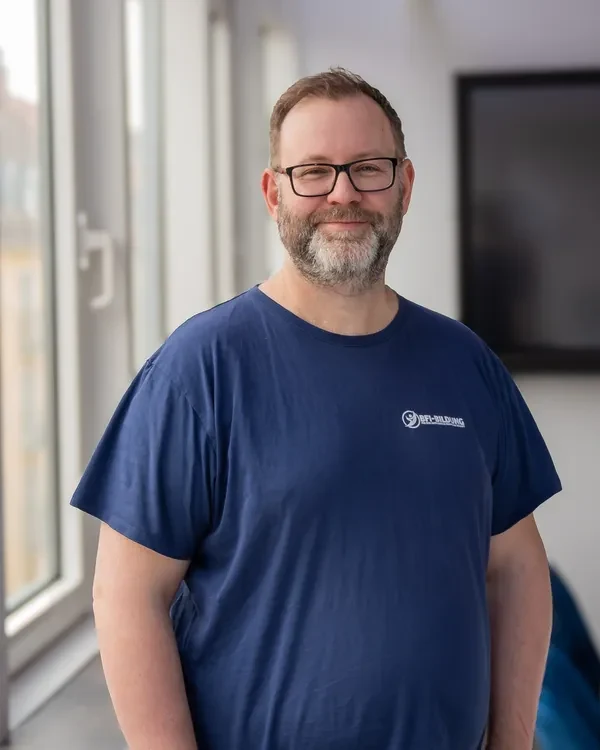
Jörg Küfner 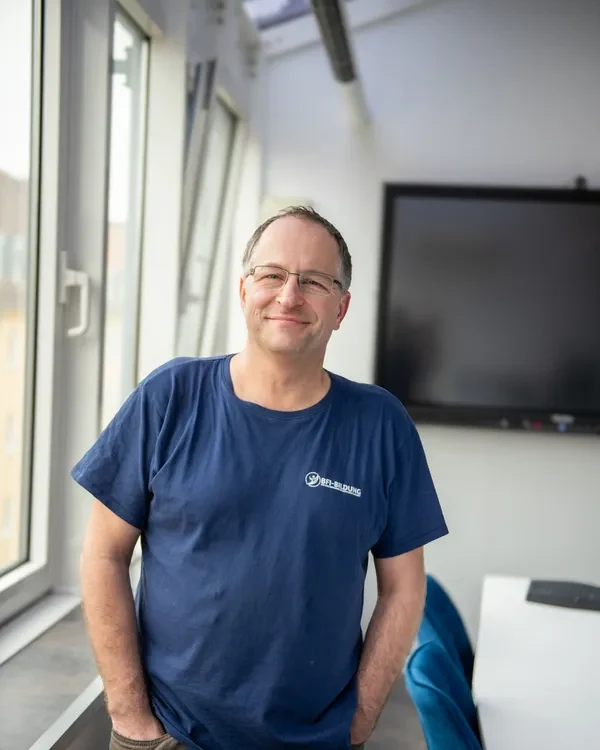
Tibor Rohay 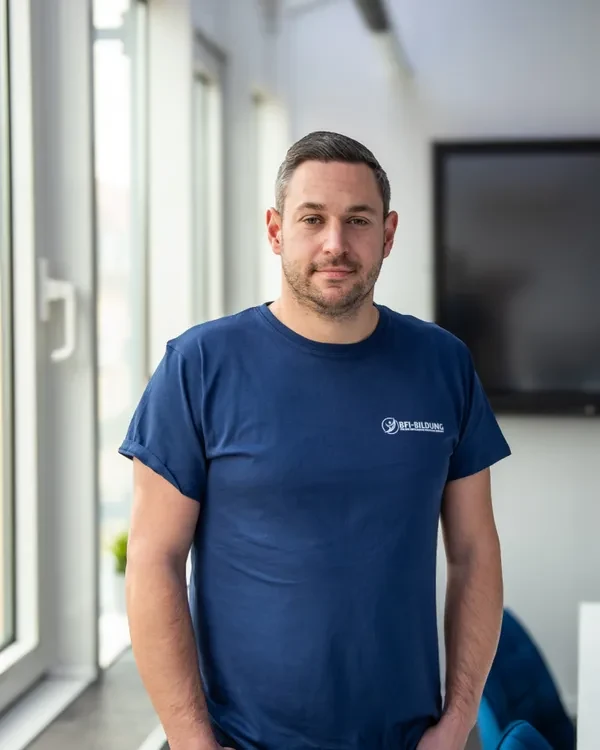
Tobias Weikert
- Reviews on Google(opens Google Maps)
4.9 out of 5 starsBased on 101 reviews, as of 23 October 2026
Reviews from Google
 AZAV-certifiedCertificate 73010605
- Since 1983Non-profit education provider
What you get out of it.
You finish sooner and receive extra money. Afterwards you have a job with a future.
Until you qualify
18 months sooner
than with an apprenticeship. The qualification is the same.
Retraining at BFI: 24 months. Apprenticeship: 42 months. You finish 18 months sooner, with the same qualification.
During retraining
on top: up to€6,100
This is the extra money you receive on top of your benefits.
24 months of training allowance at €150 each, plus €1,000 for passing part 1 of the exam and €1,500 for passing the final exam.
After the exam
median€5,080
This is what skilled workers in Nuremberg earn per month, gross. It is not a starting salary.
Half of all skilled workers in Nuremberg earn between €4,436 and €5,709 gross per month. The median is €5,080.
Is this trade right for you?
You like working with your hands and are interested in machines and metal.
- RequirementsNo school certificate needed.
- You don’t need any certificates or references either.
- ConsultationA short aptitude test.
- It shows during your consultation whether the trade suits you. The employment agency often adds a test of its own.
- AgeUsually from age 25.
- There is no fixed age limit. Younger? Talk to us anyway.
- LanguageGerman tutoring included.
- Tuesday and Thursday15:30–17:00Here at BFI, with the Study Up language school. BFI covers the cost. German at B2 level is recommended but not required. You do not need a certificate.
A health condition?How to find out beforehand what the retraining demands physically. Read the answer
You will meet
 Gabriele Herrmann
 Silvia Haala
 Maximilian Weber
 Johannes Weber
Two portraits edited with AI, based on real photos
- Duration
- approx. 60 min
- Cost
- Free
- No obligation
- Location
- Färberstraße 41
- Underground: Opernhaus, Weißer Turm
Free parking: we validate your parking ticket at the appointment.
Wheelchair accessible: ramp at the entrance, lifts throughout the building.