
RetrainingElectronics technicianEnergy and building technology (HWK)
Smart homes, solar power, e-mobility: You connect the future.

- Qualification
- Journeyman’s certificate (HWK)
- Duration
- 28 months, full time
- Cost
- €0 with an education voucher
From the distribution board to the smart home.
Your future workplace, station by station. And what you learn for it in the retraining.
From the distribution board to the smart home.
Your future workplace, station by station. And what you learn for it in the retraining.
Station 1 of 6
Power comes into the house.
Through the meter and main switch into the distribution board. The residual current device protects people from electric shock.
What you learn for it- Protective measures for electrical installations and equipment
How your retraining works.
28 months in four steps. From the first day to your qualification.
Start 1 Mar 2027
End 9 Jul 2029
approx.18months
Basic training
Measuring, protective measures, installation and controls. At the end: part 1 of the journeyman exam.
3months
Work placement
Right after part 1 you work in a company for three months.
approx.7months
Building technology
Energy systems, drives and building automation. Then preparation for the exam.
Goal
Journeyman exam part 2, Chamber of Crafts
Then you are a skilled worker.
End 9 Jul 2029
- Classes
- Mon–Fri, 08:00–15:15
- Holidays
- 46 days, in line with school holidays
- Curriculum
- PDF in German, 0.9 MB
See all learning content16 learning fields, each explained · 3,840 teaching units
Basics
You read and draw circuit diagrams and work with manufacturers’ instructions, including in English. You discuss work in the team and write reports.
For example
You read in the circuit diagram how a system is wired and record your work in a report.
120 of 3,840 teaching units
3% of the whole retraining
You plan the work steps and estimate how long they will take. You get materials, tools and measuring instruments ready and check the quality of your work at the end.
For example
After a job, you note down how much material and working time you needed.
200 of 3,840 teaching units
5% of the whole retraining
You advise customers on devices and materials. You point out hazards and help prepare quotes.
For example
You hand over a finished system and show the customer how to use it.
80 of 3,840 teaching units
2% of the whole retraining
You build data protection into technical systems and check that it works. You advise customers on data protection.
For example
You check a system’s log files: who accessed it, and when?
80 of 3,840 teaching units
2% of the whole retraining
Electricity can put people at risk. You learn the safety rules and use measuring instruments to check that an installation’s protective measures work.
For example
You check that the residual current device trips in time and enter the result in the test report.
400 of 3,840 teaching units
10% of the whole retraining
You choose the right measuring instrument, measure electrical quantities such as voltage and current, and calculate with them. That way you understand how a system works.
For example
You measure voltage and current on a device and compare the values with the manufacturer’s data.
200 of 3,840 teaching units
5% of the whole retraining
When a device fails, you track down the fault step by step. Then you repair it and check that it is safe again.
For example
You narrow down the fault, replace the defective part and record the test in a report.
120 of 3,840 teaching units
3% of the whole retraining
You drill, fix and wire. You lay cables and mount distribution boards, switches and sockets.
For example
You assemble a distribution board, wire it and put it into operation.
480 of 3,840 teaching units
13% of the whole retraining
You connect computers and devices into a network so that they can exchange data. You set up software and configure the devices.
For example
You make up network cables, connect the devices and check that the data gets through.
80 of 3,840 teaching units
2% of the whole retraining
A control system switches equipment automatically. You build control systems, wire and program them and put them into operation.
For example
You adjust a sensor and check that the control system responds to it correctly.
320 of 3,840 teaching units
8% of the whole retraining
Building technology
You plan the electrical systems of a building. You check what is already there, what the customer needs and which components fit.
For example
You plan a system for a house that uses and stores solar power, and you choose the components.
640 of 3,840 teaching units
17% of the whole retraining
This is about technology that converts electricity into light, heat or motion. You install it and put it into operation.
For example
You install a charging point for electric cars or connect an electric motor.
400 of 3,840 teaching units
10% of the whole retraining
You set up electrical appliances for homes and businesses, connect them and adjust their settings. Telephone and communication systems are part of this too.
For example
You connect an electric cooker and put it into operation.
200 of 3,840 teaching units
5% of the whole retraining
In modern buildings, the technology controls itself. You install this building automation, set it up and fix faults.
For example
You install smoke alarms and program a small controller.
320 of 3,840 teaching units
8% of the whole retraining
You mount and earth antennas and install systems for reception and fast internet in buildings. Then you check that everything works.
For example
You align an antenna on the roof, earth it and check the reception.
80 of 3,840 teaching units
2% of the whole retraining
Electrical installations have to be inspected regularly. You test them in line with the applicable standards, maintain them and repair them.
For example
In a building, you test the emergency lighting, the smoke alarms and the protective measures.
180 of 3,840 teaching units
5% of the whole retraining
Throughout the retraining
Working safely and healthily, environmental protection and sustainability, the digital world of work, your rights at work, and economics and social studies.
How the exam works
Part 130%of the overall result
You build part of an installation, test the protective measures and look for faults.
- Electrical installations and equipmentpractical and written, 10 hours
Part 270%of the overall result
A practical customer order and three written exams.
- Customer orderpractical, with a technical discussion, 16 hours36%
- System designwritten, 2 hours12%
- Function and system analysiswritten, 2 hours12%
- Economics and social studieswritten, 1 hour10%
Explanations and exam based on the German training regulations for electronics technicians (2021)
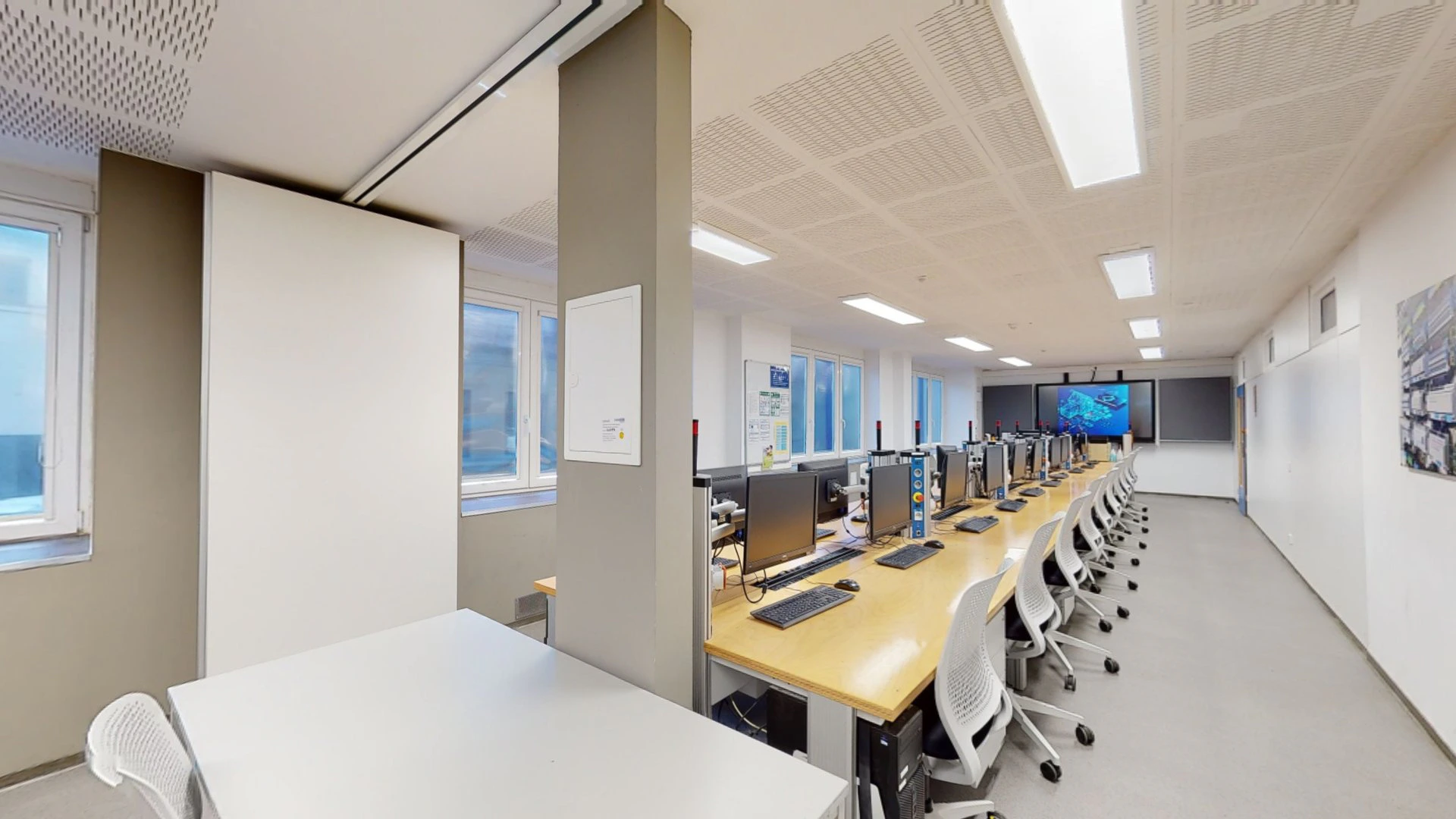
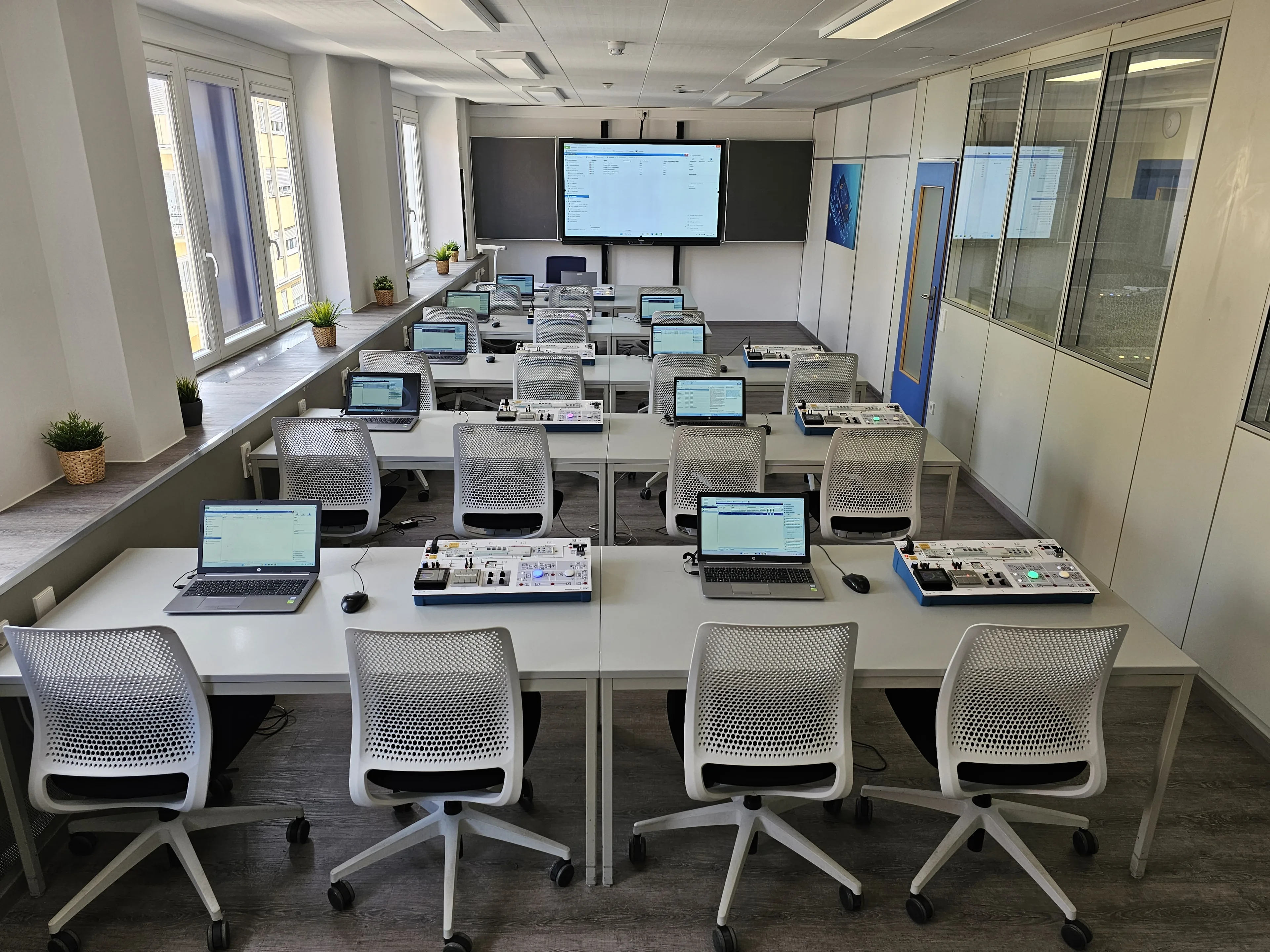
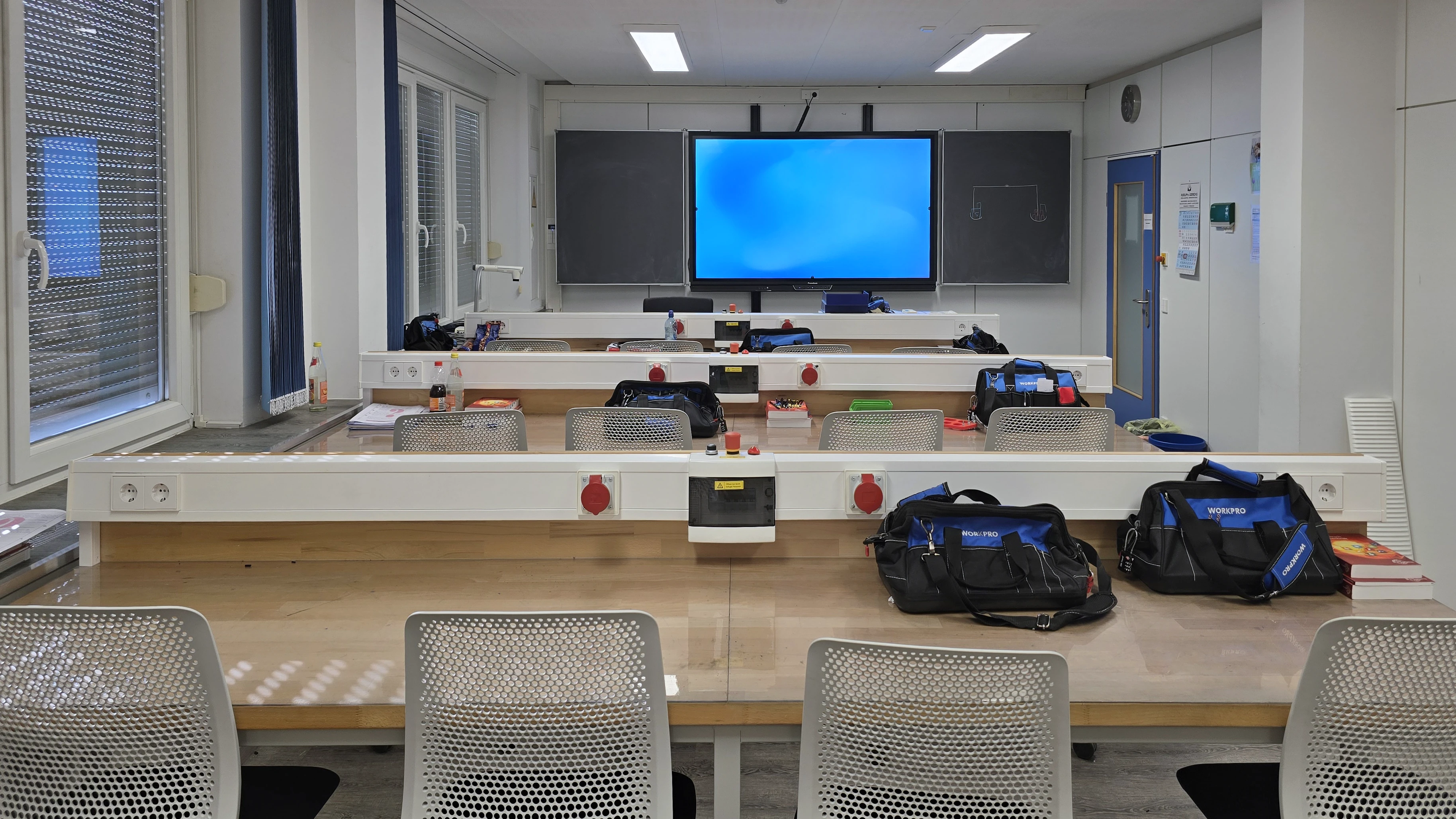
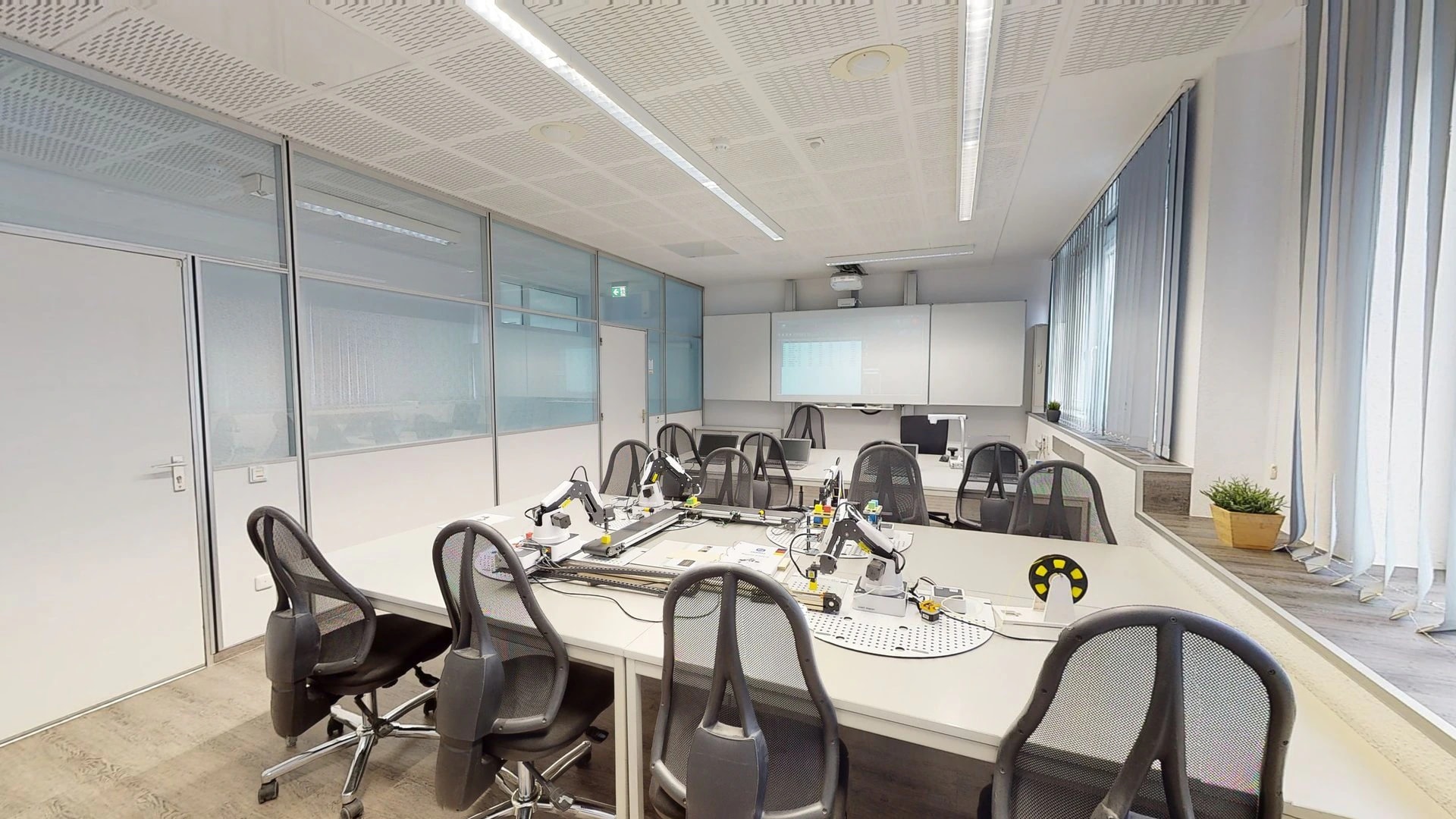
Where you learn.
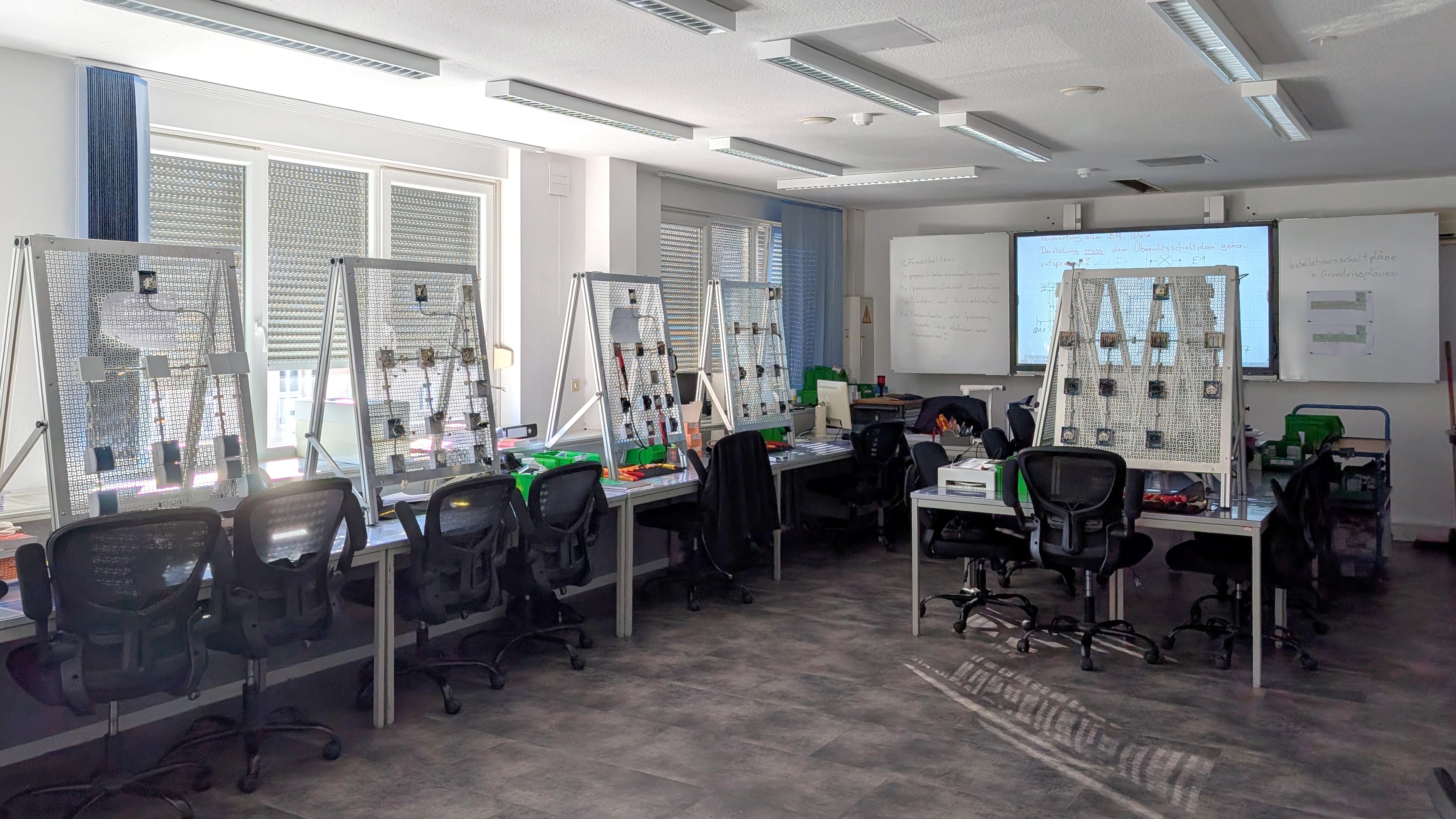
The rooms of your retraining in 3D. Take a look around before your first day.
You learn from them.
You learn in small groups of approx. 15 people.
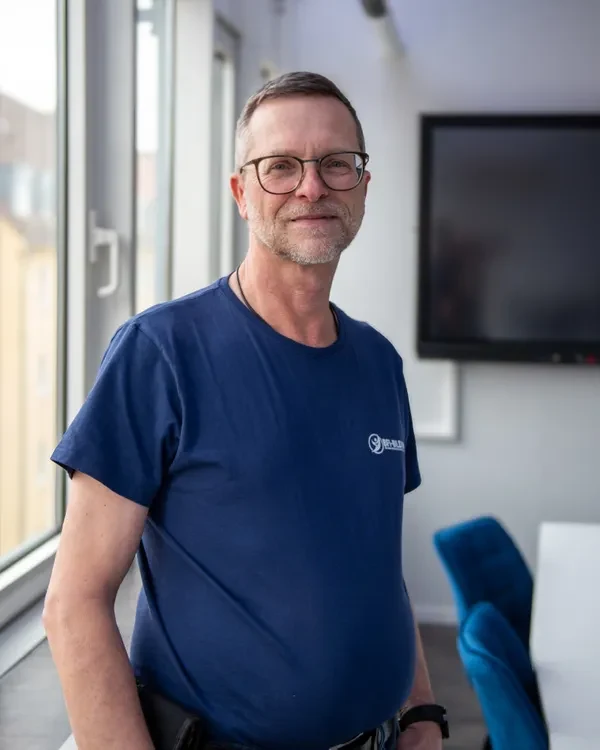
Karl-Heinz Zimmermann 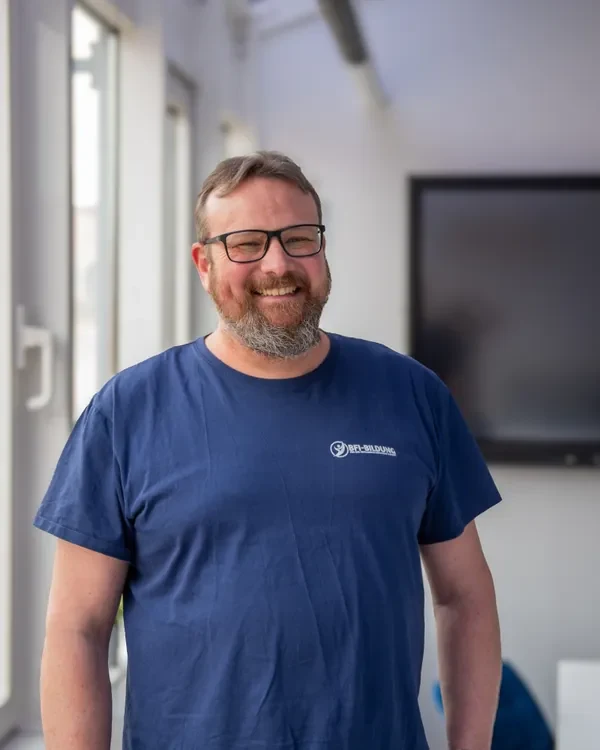
Gerhard Hausmann 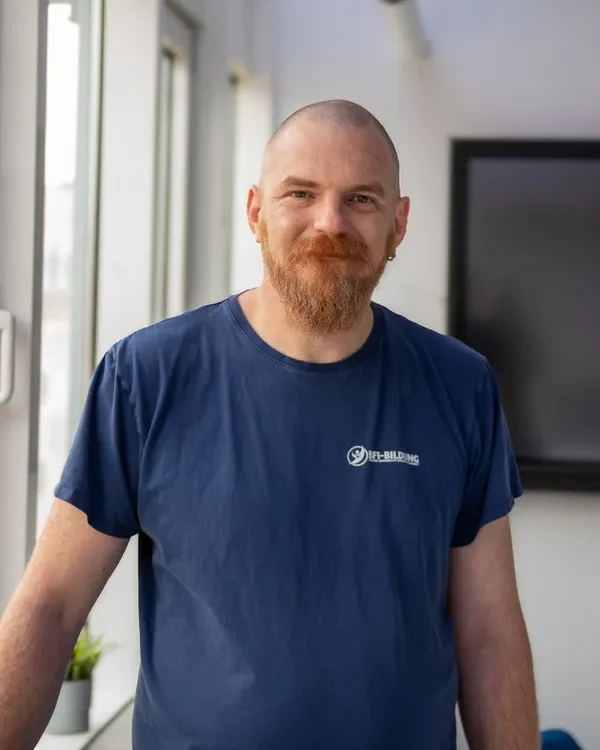
Holger Kessler 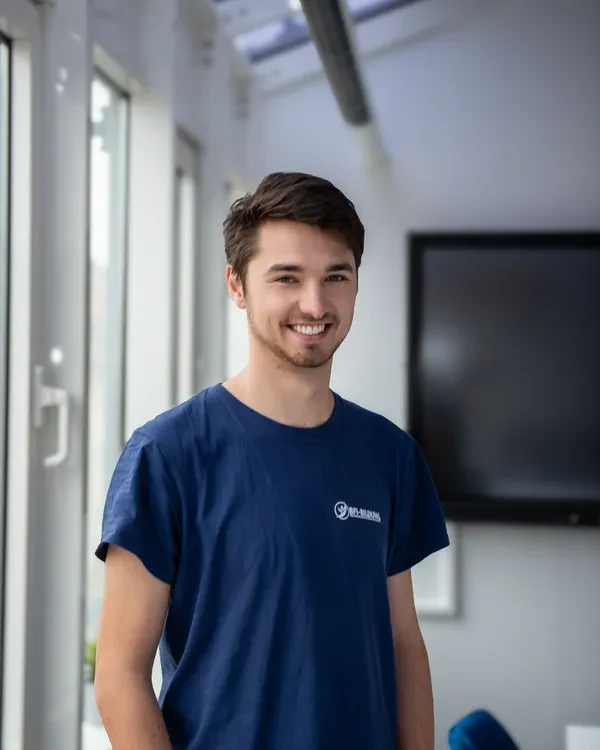
Peter Muschaweck 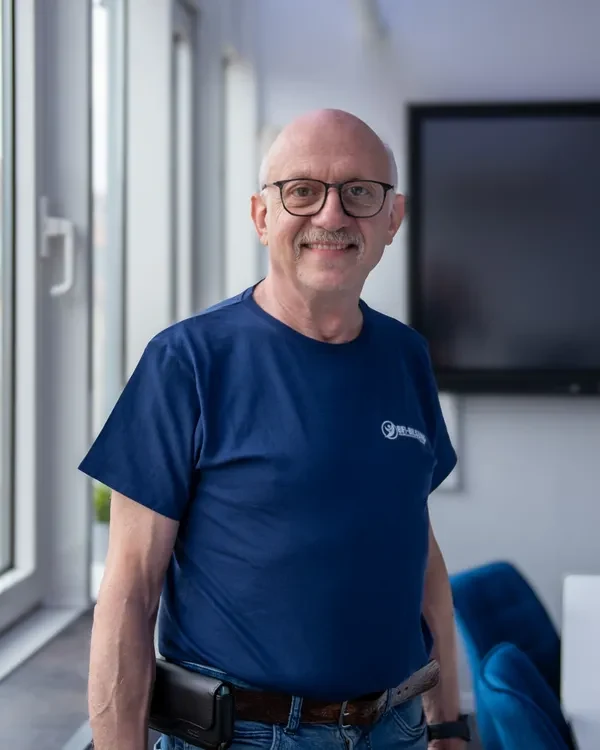
Erwin Mehwald 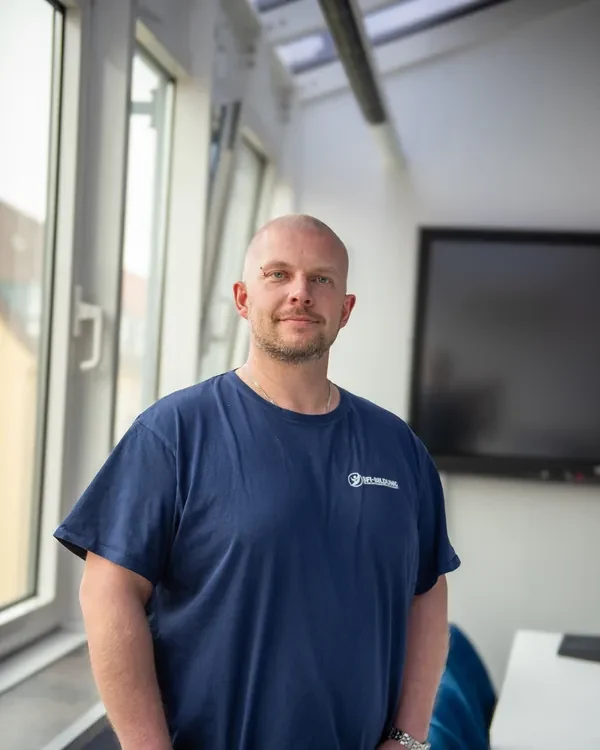
Tim Frauendorfer 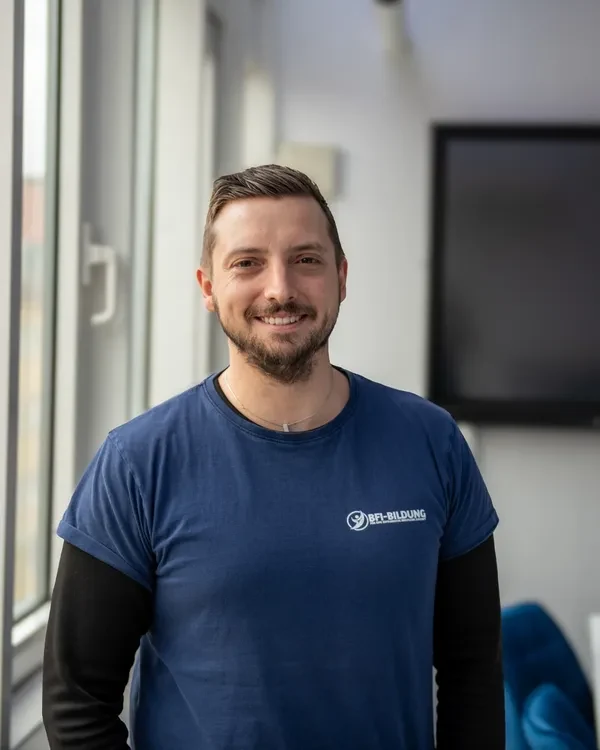
Patrick Walter Michael Haas
- Reviews on Google(opens Google Maps)
4.9 out of 5 starsBased on 101 reviews, as of 23 October 2026
Reviews from Google
 AZAV-certifiedCertificate 73010605
- Since 1983Non-profit education provider
What you get out of it.
You finish sooner and receive extra money. Afterwards you have a job with a future.
Until you qualify
14 months sooner
than with an apprenticeship. The qualification is the same.
Retraining at BFI: 28 months. Apprenticeship: 42 months. You finish 14 months sooner, with the same qualification.
During retraining
on top: up to€6,700
This is the extra money you receive on top of your benefits.
28 months of training allowance at €150 each, plus €1,000 for passing part 1 of the exam and €1,500 for passing the final exam.
After the exam
median€4,121
This is what skilled workers in Nuremberg earn per month, gross. It is not a starting salary.
Half of all skilled workers in Nuremberg earn between €3,408 and €4,901 gross per month. The median is €4,121.
Is this trade right for you?
You like working with your hands, carefully and responsibly.
Many people still know the trade as electrician or electrical installer; since 2003 it has been called electronics technician for energy and building technology.
- RequirementsNo school certificate needed.
- You don’t need any certificates or references either.
- ConsultationA short aptitude test.
- It shows during your consultation whether the trade suits you. The employment agency often adds a test of its own.
- AgeUsually from age 25.
- There is no fixed age limit. Younger? Talk to us anyway.
- LanguageGerman tutoring included.
- Monday, Wednesday and Friday15:30–17:00Here at BFI, with the Study Up language school. BFI covers the cost. German at B2 level is recommended but not required. You do not need a certificate.
Back problems or a dust allergy?Once qualified, there is also work in offices and at the computer. See examples
You will meet
 Gabriele Herrmann
 Silvia Haala
 Maximilian Weber
 Johannes Weber
Two portraits edited with AI, based on real photos
- Duration
- approx. 60 min
- Cost
- Free
- No obligation
- Location
- Färberstraße 41
- Underground: Opernhaus, Weißer Turm
Free parking: we validate your parking ticket at the appointment.
Wheelchair accessible: ramp at the entrance, lifts throughout the building.