Further training · Electrical
Industrial electrician (IHK)
Part-time training as a qualified electrician under DGUV Regulation 3, on Fridays and Saturdays. In cooperation with IHK Akademie Mittelfranken.
Book an on-site consultation- Qualification
- IHK certificate
- Duration
- 420 hours
- alongside work
- Cost
- €4,995
- per person, usually paid by the employer
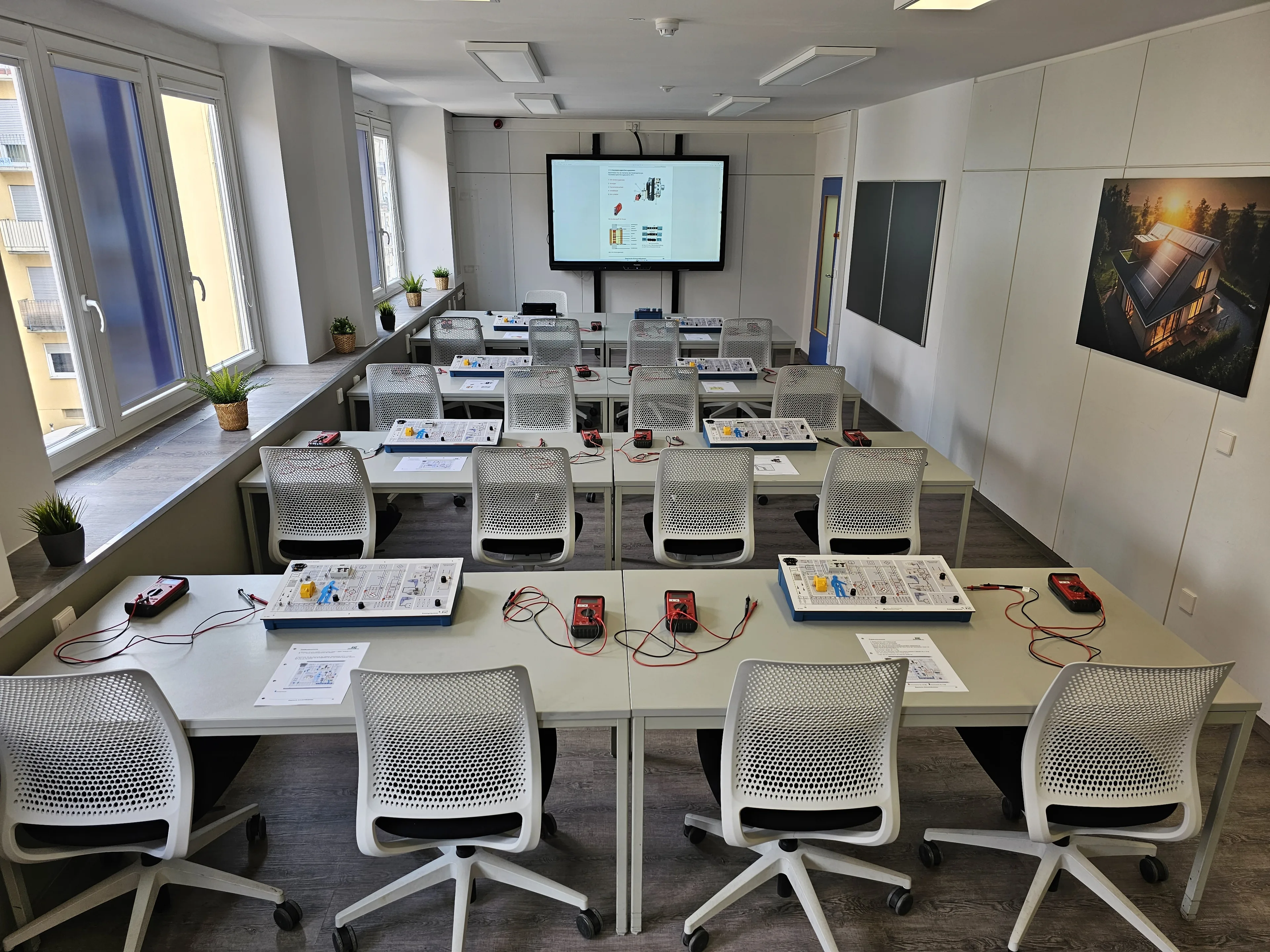
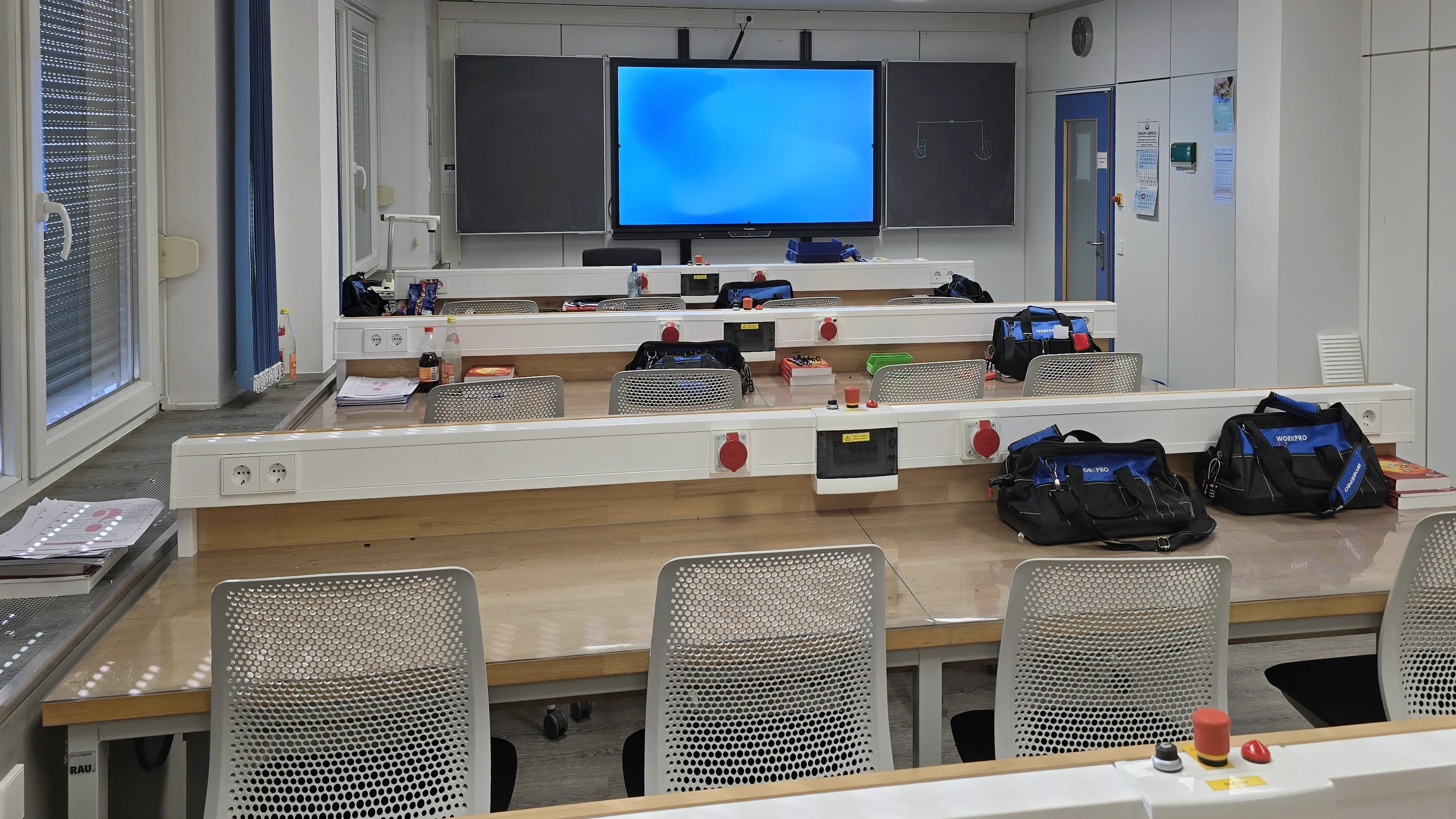
Practice stations with test instruments and test leads
How your training works.
Become a qualified electrician alongside your job. Your employer decides which work you take on afterwards.
420hours
Theory and practice
Basics, regulations, testing, controls and troubleshooting.
Goal
Exam, written and practical
Then you receive the IHK certificate.
- Classes
- Fri–Sat, 08:00–15:15
- Course page and registration
- IHK Akademie
See all learning content8 topics, each explained
Industrial electrician
You learn how electricity works: voltage, current and resistance, direct, alternating and three-phase current, power and transformers. You calculate with Ohm’s law and check by measuring.
For example
In a series circuit you measure voltage and current and check the result with Ohm’s law.
Which laws, regulations and technical rules apply at work? You get to know them, from health protection to handling dangerous goods and waste.
For example
You work according to an operating instruction and dispose of waste as required.
Electricity can harm people, animals and property. You learn the key standards: for installations (DIN VDE 0100), their operation (0105-100), cables (0298), machines (0113) and testing devices (0701/0702).
For example
You look up in DIN VDE 0298-4 how much continuous load a cable may carry.
Here you take the measurements yourself, on systems, machines and devices. You assess the readings and write a test report.
For example
You test a drill under DIN EN 50699 (VDE 0702) and enter the readings in the test report.
A programmable logic controller (PLC) makes machines work according to a program. You write simple programs in FBD, LD and IL, test them and document them.
For example
You write a small program, test it on the controller and find errors with the diagnostics.
You install lighting circuits and wire sub-distribution boards, plugs and couplers. Then you measure the final circuits and check that everything works.
For example
You wire a sub-distribution board and check every circuit by measuring and testing its function.
You build contactor circuits that start, switch and protect motors, with an emergency stop. Sensors, actuators and electro-pneumatics are part of it too.
For example
You build a reversing circuit: at the push of a button, a motor turns clockwise or anticlockwise.
When something does not work, you find the fault: in lighting and socket circuits, in machine controls and in devices.
For example
A socket circuit with a residual current device (RCD) keeps tripping. You look for the cause.
Content as listed on the IHK Akademie Mittelfranken course page (German)
How you finish.
At the end you haveIHK certificateIndustrial electrician (IHK)
- How you are assessed
- In written and practical tests. You need at least 50% of the points in each test and must attend at least 80% of the classes.
- What it allows you to do
- It shows that you can work independently as a qualified electrician under DGUV Regulation 3 in industry. Your employer decides which work you take on. They check that your knowledge is sufficient.
- Good to know
- Further training for skilled workers, not a vocational qualification.
From the classroom.
The controller switches the motor.
The control cabinet holds terminals, a motor protection switch, a contactor and a small controller. When the controller gives the signal, the contactor pulls in and the motor runs. You build, program and test circuits like this on the course.
- From the learning field
- Control technology and motor circuits
- PLC programming
Move your mouse over the drawing.Tap the drawing.Drawing for illustration.
How to test to VDE standards.
On the course you test installations and machines yourself. Here is the insulation resistance test, step by step.
- 1Isolate: the circuit breaker disconnects all conductors.
- 2Secure against reconnection: lock and tag.
- 3Verify that no voltage is present, on all poles.
- 4Link L1, L2, L3 and N. Test probes on L1 and PE.
- 5Measure at 500 V DC.
- 6Assess: 1 MΩ or more is a pass. Then remove the link.
The reading of 286 MΩ is an example.
Test voltage and minimum value: DIN VDE 0100-600:2017-06, Table 6.1 (up to 500 V nominal voltage). Safety rules: DIN VDE 0105-100.
For employers.
Want to qualify staff as electricians? Everything you need for planning at a glance.
- Cost
- €4,995
- per person, VAT-exempt, including the exam, materials and course documents
- Classes
- Friday and Saturday
- 08:00–15:15 each day
- Period
- 5 Feb – 11 Sept 2027
- 420 hours
- Location
- Färberstraße 41
- 90402 Nürnberg
- Why a qualified electrician?
- Electrical installations and equipment may only be set up, modified and maintained by a qualified electrician or under their direction and supervision. This is a binding requirement of accident prevention regulation DGUV Regulation 3, section 3.
- Your responsibility
- You decide which work your qualified electrician takes on and check that their knowledge is sufficient. The training does not relieve you of this duty.
Registration with IHK Akademie
You register your staff with IHK Akademie Mittelfranken. Classes take place at BFI.

Sources: IHK Akademie Mittelfranken course page (German) · DGUV Regulation 3 (PDF, German)
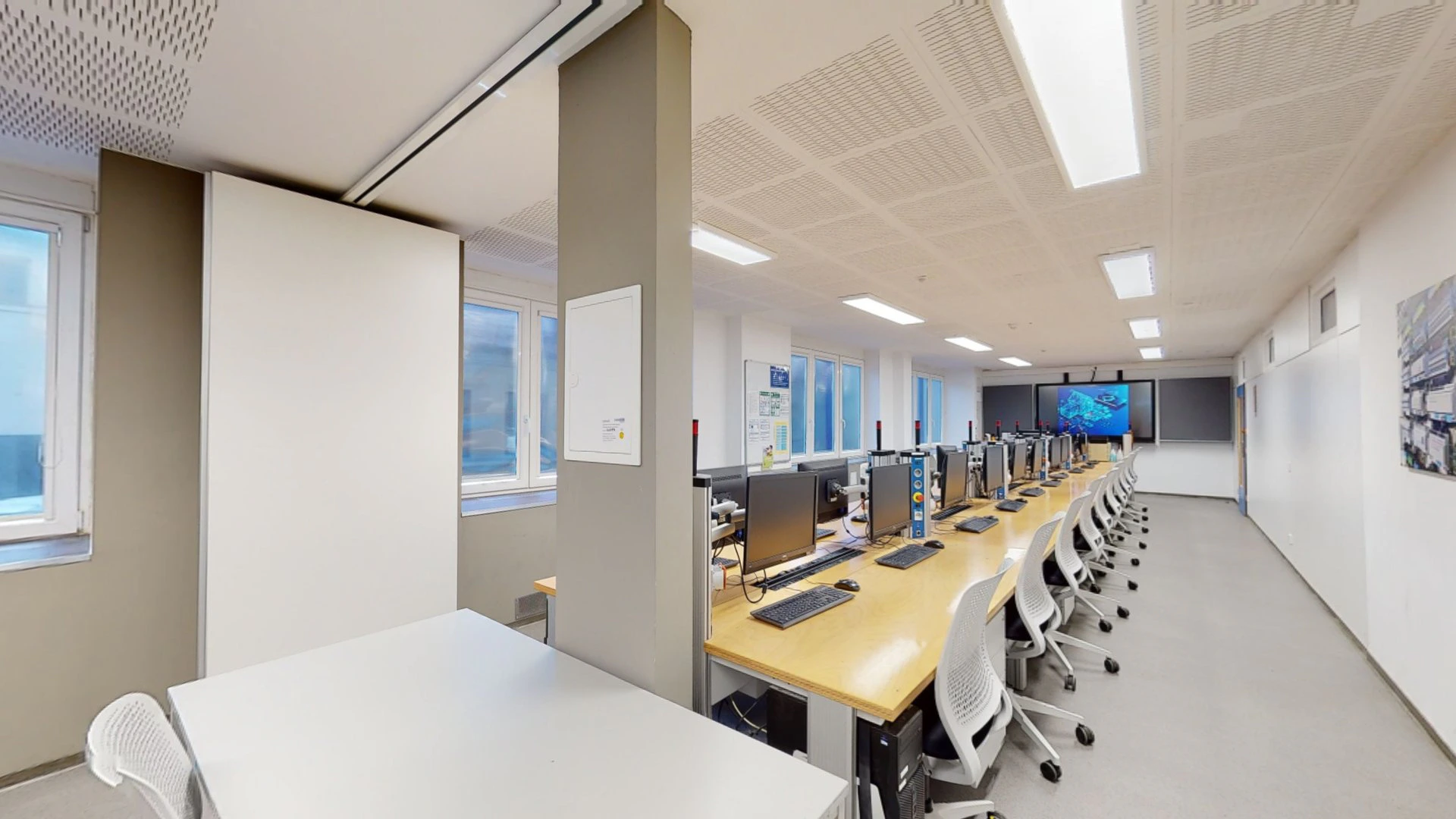
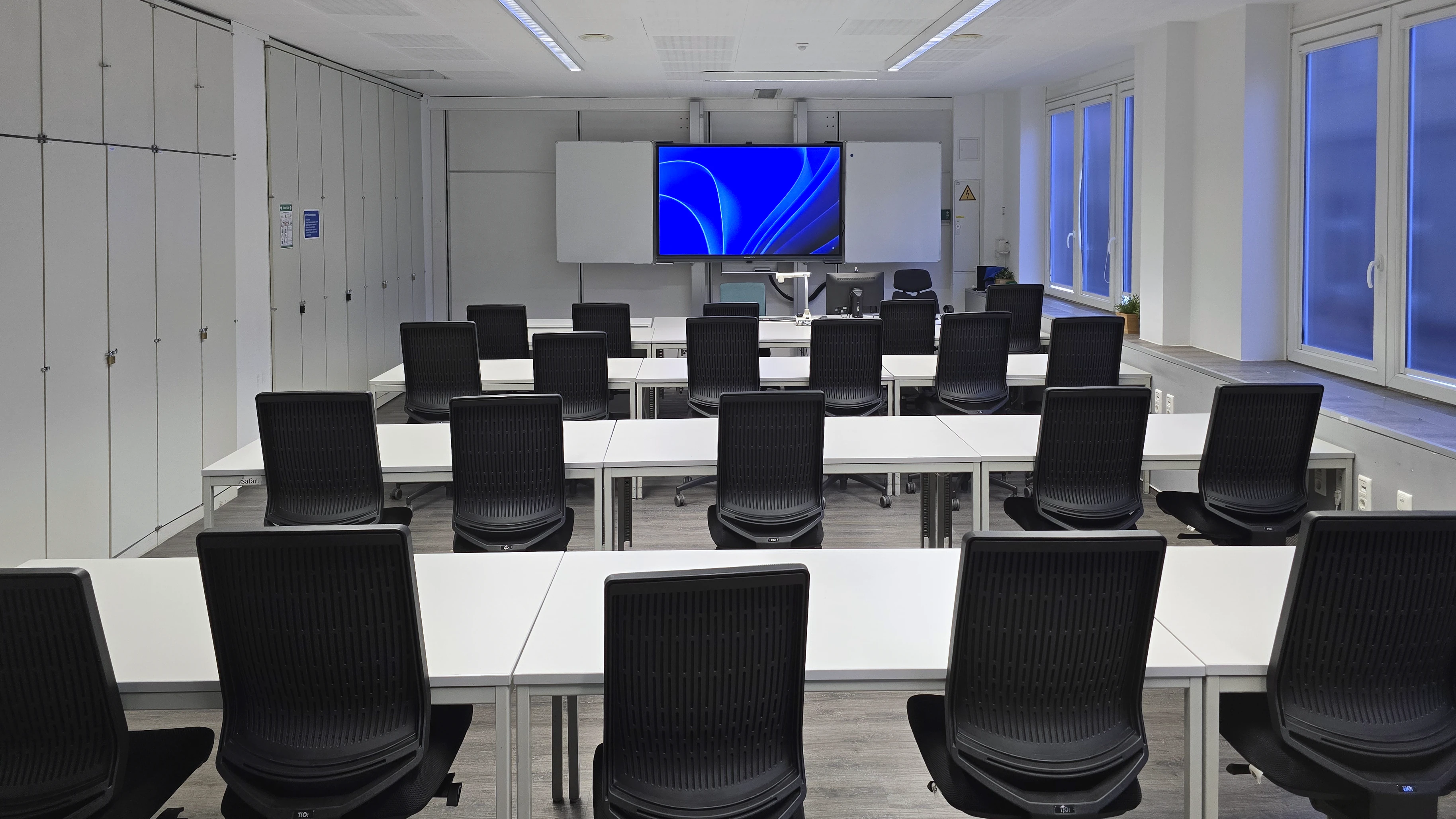
Where you learn.
This is where your training takes place. Take a look at the rooms in 3D before your first day.
You learn from them.
You learn in small groups of approx. 15 people.
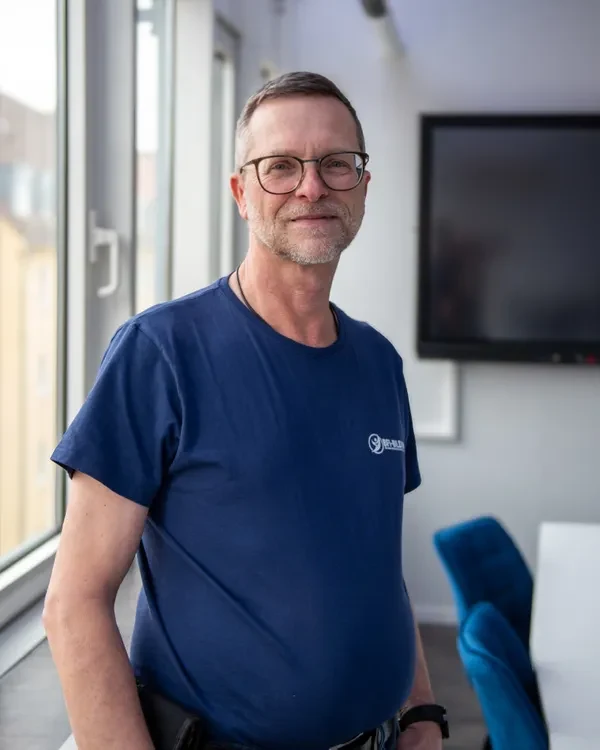
Karl-Heinz Zimmermann 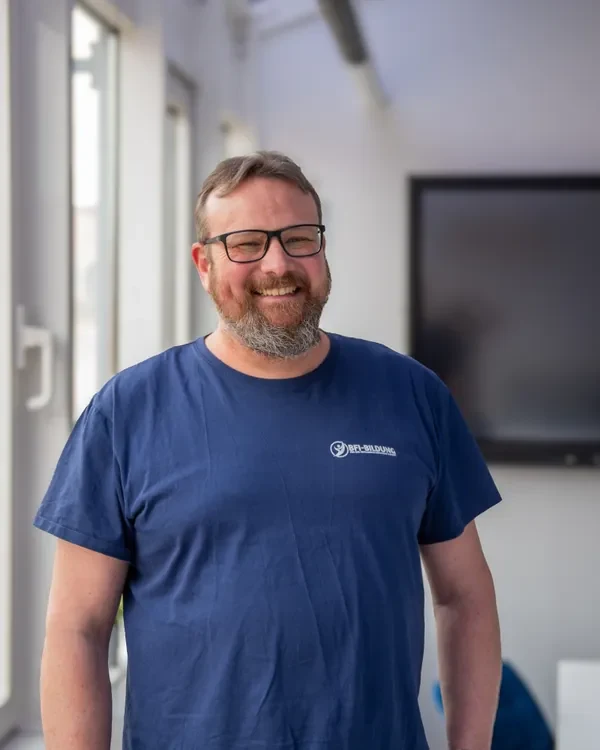
Gerhard Hausmann 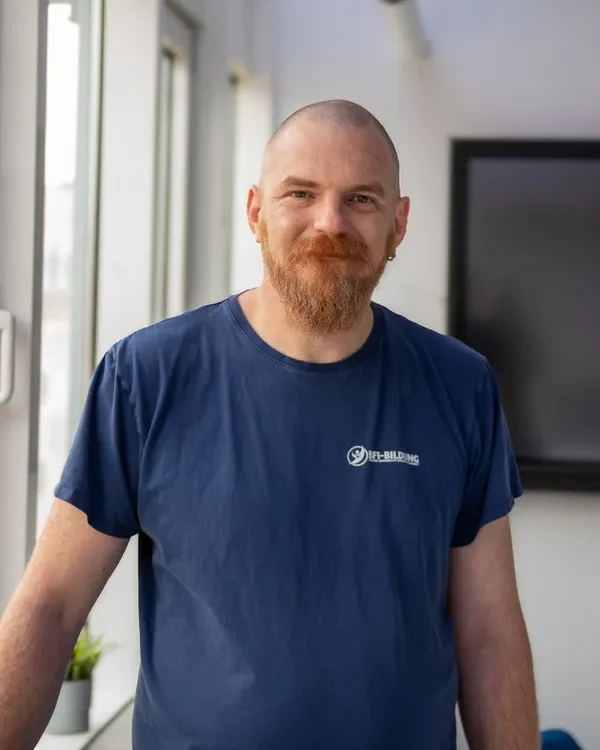
Holger Kessler 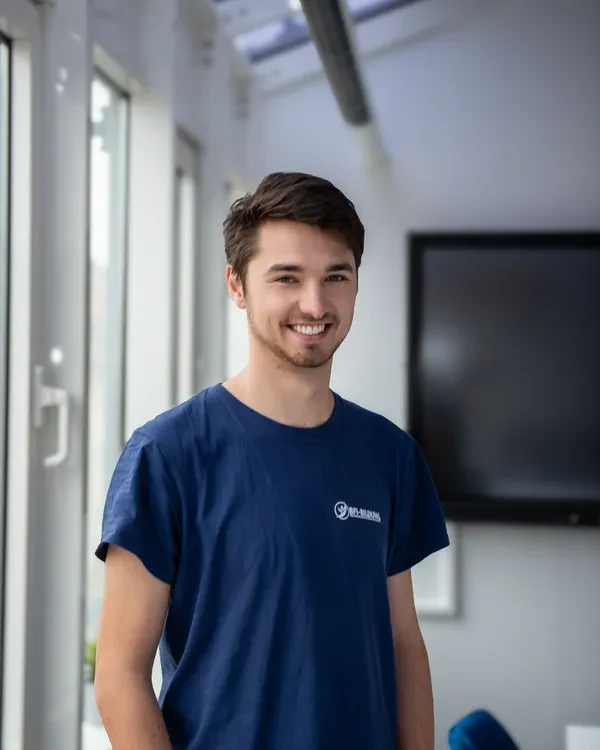
Peter Muschaweck 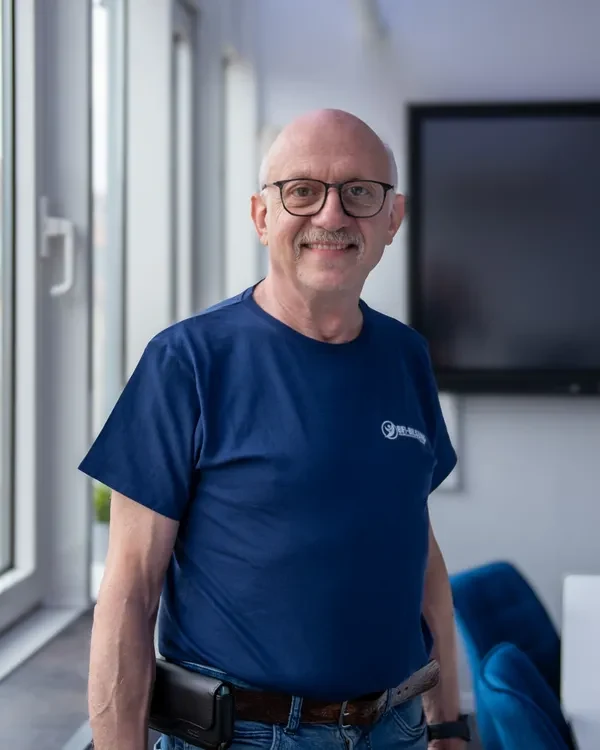
Erwin Mehwald 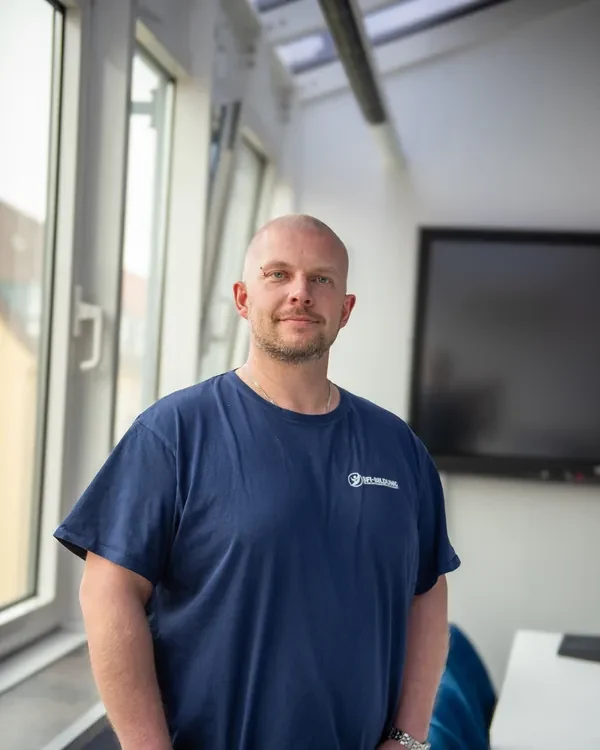
Tim Frauendorfer 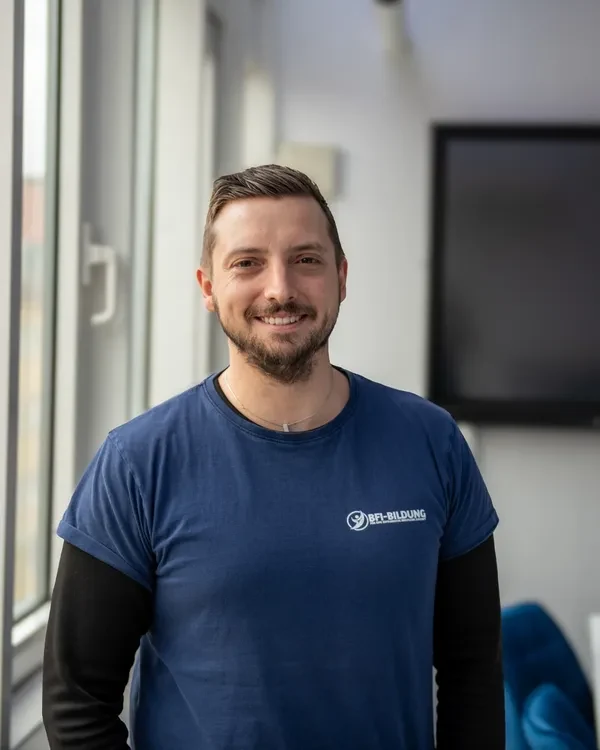
Patrick Walter Michael Haas
- Reviews on Google(opens Google Maps)
4.9 out of 5 starsBased on 101 reviews, as of 23 October 2026
Reviews from Google
 AZAV-certifiedCertificate 73010605
- Since 1983Non-profit education provider
Who is it for?
For skilled workers with a technical background. We clarify at the consultation whether the course suits you.
- RequirementsTechnical background
- You have technical vocational training, work experience in a technical field, or both.
- Who for?Skilled workers in industry
- You are to take on electrical work independently in your company.
- Who pays?Usually the employer
- You can also pay for the course yourself. Funding is possible in individual cases.
You will meet
 Gabriele Herrmann
 Silvia Haala
 Maximilian Weber
 Johannes Weber
Two portraits edited with AI, based on real photos
- Duration
- approx. 60 min
- Cost
- Free
- No obligation
- Location
- Färberstraße 41
- Underground: Opernhaus, Weißer Turm
Free parking: we validate your parking ticket at the appointment.
Wheelchair accessible: ramp at the entrance, lifts throughout the building.